Stages of Change
June 5th, 2026 Stages of Change 3 comments
So often, if we're struggling with our drinking, we want things to be black and white. We want to be able to pose simple questions; Why am I like this? Why do I do this? Why can’t I stop doing this? Why, despite the onslaught of self-help books, blogs, podcasts, inspirational quotes and well-meaning advice do I let myself down? Again and again and again.
And we want simple answers in return; It’s because of this one factor from your childhood. It’s because of this one thing about your genetics. It’s because of this one person that you know. It’s because you haven’t found the one right answer. One simple answer that can be clearly answered so that we can start living perfectly perfect in all ways on all days.
Sadly, this isn't possible.
Things aren’t black and white. Life isn’t black and white. Humans aren’t black and white. And addiction sure isn’t black and white. It's all shades of grey.
Addiction is incredibly complex and multifaceted. What leads a person into addiction? A combination of factors. How do we know when we’re addicted? There’s no single moment when things suddenly become a problem. How do we measure addiction? It’s all about the negative impacts, but how you view and measure those negative impacts shifts from person to person, from day to day.
It’s all on a big, grey, complex, multi-faceted, individualised spectrum.
And so is sobriety. So is recovery. So is the process of facing up to a problem and then addressing it. It's not a simple case of realising things are bad one day and then stopping your habit the next. Far from it. It can be a long slow process involving months and months of actions, reactions, denials, realisations, confusion, wonderings, cravings, resisting, binging, pondering, ignoring, highs, lows, and everything in between. The change process can be lengthy and messy.
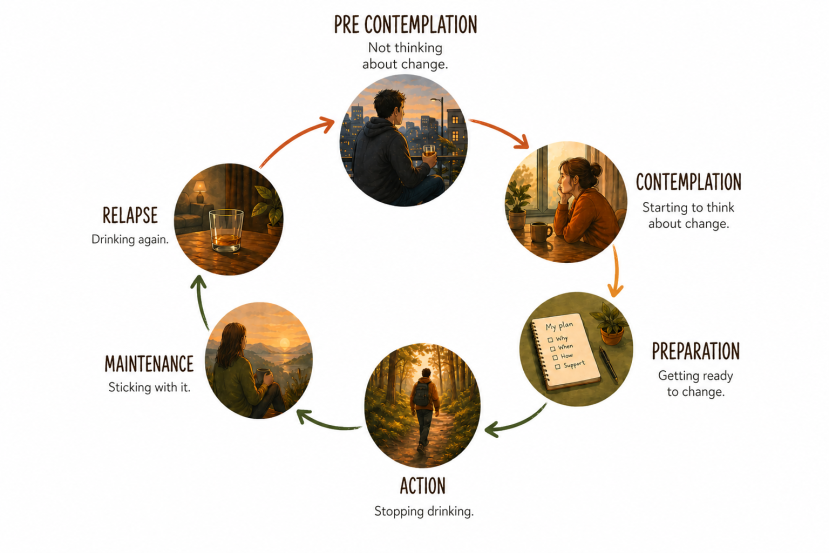
But what is known amidst the turmoil and chaos, is that the process for changing a habit such as problematic drinking tends to follow similar phases for everyone, with 6 known stages that are gone through. This is captured in the 'Stages of Change' model seen above (it was developed in the 1970s by a couple of psychologists called James Prochaska and Carlo DiClemente). It's often shown in a circle like it is above, with each stage following on from the last, but like everything else in to do with addiction - this exact flow of change isn't always followed in a linear way.
Things aren't black and white when it comes to addiction, remember?!
The 6 Stages of Change are;
- Precontemplation (Not Thinking About Change): You're not thinking about changing and have no intention to.
- Contemplation (Thinking): You're starting to think about change, there's a little worried voice piping up inside your head. You might be weighing the pros and cons of stopping, flip flopping between imagining stopping and not.
- Preparation (Ready): You're on the cusp of changing, thinking of some plans and maybe gathering information.
- Action (Doing): You stop drinking and actively shift your behaviours, maybe changing the places you go or people you see. This stage sucks up a huge amount of time and energy.
- Maintenance (Sticking With It): You've had a period of time with changed behaviours and are putting things into place to try prevent relapse and make it last.
- Relapse (Recycling): You have a slip, a lapse, a setback and return to previous drinking patterns. It happens often but can be considered a normal, temporary setback rather than a failure. A good opportunity to learn.
To read more detail on each stage, include quotes from many Living Sober members who have shared their thoughts, insights, memories and lessons learned, go here.
Continue reading

Sober Story: Ida
This week’s sober story comes from Ida, a 58-year-old living on the North Shore in Auckland.
December 12, 2018 – 2 comments
Sober Story: Dana
This week’s Sober Story comes from Dana, a 47-year-old living in midwest USA.
September 6, 2018 – 7 comments

Sober Story: Joseph
This week’s Sober Story comes from Joseph (@jewala), a 34-year-old living in Nigeria /Abuja (Federal Capital Territory).
October 18, 2017 – 14 comments
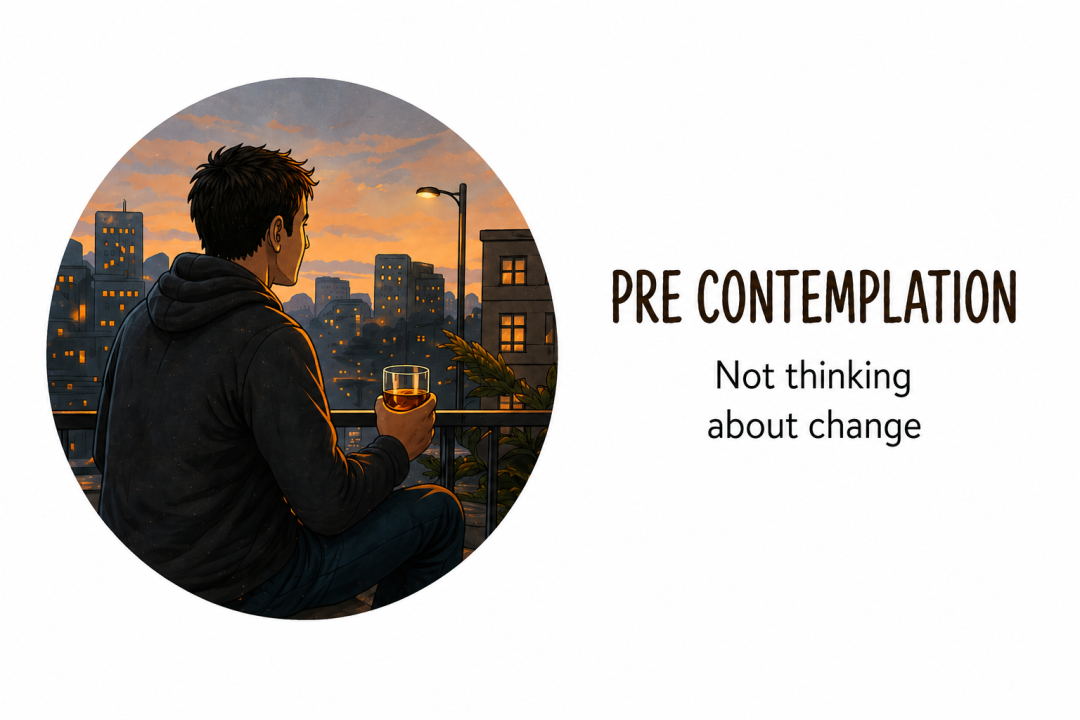
When heavy drinking is normal (Pre-Contemplation)
At Pre-Contemplation, the negative consequences are real and impactful, but you're not clearly seeing them yet.
June 5, 2026 – 1 comment