Disconnection
October 10th, 2025 Mrs D's Blog 5 comments
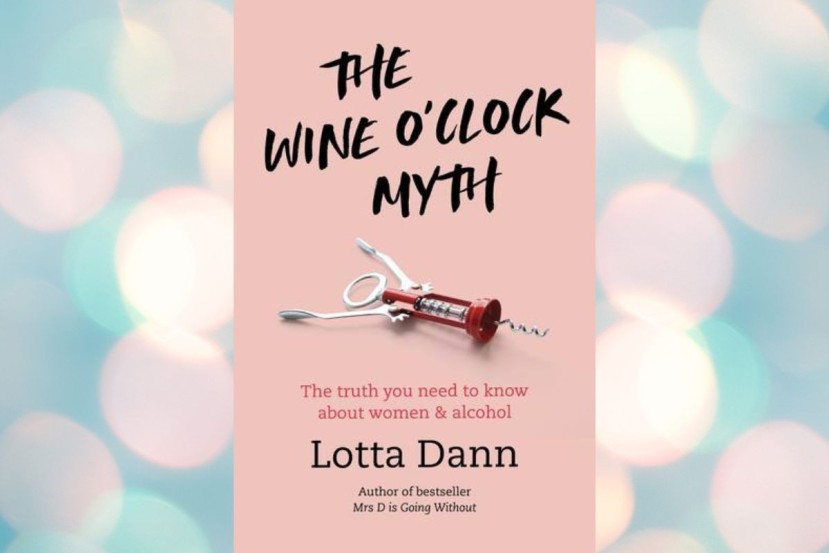
This is an excerpt from my book 'The Wine O'Clock Myth', published in 2020.
=======
Sometimes I’m right back there. Slumped on the sofa, TV on, eyes glazed, glass in hand. The scent of cheap red wine wafts up as I bend my elbow and take a big slurp. There’s a definite wobble in my hand. What is this? Glass number four? Five? I slurp again, draining the glass, then lurch up and stumble my way to the kitchen. I make two pieces of toast, then two more, slathering each one with copious amounts of butter. I top up my glass once more before stumbling back to the sofa to flop down again. Is it the Kardashians I’m watching? Who cares.
I’m disconnected from the tele, I’m disconnected from the room, I’m disconnected from myself. I’m a numb, dulled, sozzled woman, full of wine and toast and blurry thoughts. If I cut myself right now I’d hardly feel it. If I watched something heartfelt, I’d hardly register it. If I was having a conversation, I’d barely be in it. I am the opposite of grounded and present. I am barely there. Just a sad, soaked, disconnected version of myself.
If I look back over all my years of heavy drinking, this is the image that sticks in my mind, the bit that distresses me the most. It’s not all the money I pissed away, or the nights I lost to hazy memory. It’s not the sloppy behaviour that others may have judged me for or the bad decisions that made me unsafe. No, it’s the fact that night after night after night (the most notable thing about my drinking habit was that I rarely took a day off) I slurped wine, and in the process dulled and disconnected myself. I didn’t realise it then, but I can see it clearly now. The biggest impact of my drinking on me was disconnection. And I’m not alone in that.
Over the past five years at livingsober.org.nz I’ve been publishing weekly in-depth stories from people in long-term recovery. There are currently over 150 of these Sober Stories sitting on our site, all powerful, moving and unique, but I can say without a shadow of a doubt that the one thing that unites them is talk of disconnection. ‘I felt numb and disconnected,’ admits Sue in her story. ‘I felt disconnected from the world and those around me,’ Liv tells me in hers. ‘Being without my best buddy, alcohol, revealed to me the extent of my disconnection with the world,’ shares Alison.
Crystal McLean has worked as a counsellor for many years, predominantly with women who are struggling with their drinking. ‘What I’ve observed is they lose the ability to actually get in touch with who they are,’ she tells me over the phone from Auckland. ‘They part from themselves, their soul. It’s like they’re stunted. They don’t know how to express how they feel, they don’t know how to express their emotions, because they’ve used alcohol to suppress all of those things. I see them as being encased in this metal pod where they don’t even know who they are anymore. That’s usually when people start reaching out. It might be causing problems in their relationship or with their children, but usually the first person that it’s impacted on is themselves. They lose who they are.’
Neuroscientist Judith Grisel calls alcohol ‘a neurological sledgehammer’ because of the way it affects virtually all aspects of neural functioning. ‘One or two drinks help to blur the edges, and a reduction in anxiety promotes relaxation,’ she says in Never Enough: The neuroscience and experience of addiction. But, beyond one or two drinks, relaxation quickly turns sour: ‘As the concentration in the blood and brain increases, judgment is impaired and motor skills decline while risky behaviour increases, along with memory and concentration problems, emotional volatility, loss of coordination, including slurred speech, and confusion.’
Stumbling, slurring and not knowing what you’re watching on TV are signs of alcohol intoxication, but what about the hidden, internal impacts of letting this sledgehammer loose in our brains? Things like failing to register how we’re truly feeling about something, not being able to properly process our emotional responses to things, not hearing what other people are trying to tell us or failing to empathise with others’ experiences. These are the powerful, vital functions our brains are constantly performing, the things that make us humans not robots, the things that connect us to ourselves and to everyone around us. They’re hard to do when our neural functions are being slowed, our judgement is impaired, we’re struggling with memory and concentration problems and suffering from emotional volatility and confusion. Simply put, alcohol disconnects us from the sharp edges of human experience.
You might want to be disconnected from the sharp edges of human experience if, say, you need a limb amputated and there’s no anaesthetic around, like I saw them do once on The Walking Dead when a character got bitten by a zombie and they had to cut off his arm before he turned into a zombie himself and there were no proper drugs around so they gave him a bottle of whisky and he gulped big mouthfuls of it in between screams. That sort of human experience might be a good one to accompany with booze. But, if you’re an ordinary person trying to live a rich, full life, it’s possibly not such a great idea.
It wasn’t for me. I spent so many hours under the influence of alcohol, dulled and numb and disconnected, I never gave myself much time to clearly think and feel. Add in all the hours I spent planning my drinking, wrestling with myself about whether to drink or not, recovering from drinking and feeling bad about drinking, and it’s no surprise that I found myself sober at 40, not really knowing who I was. How could I possibly? I never gave myself any good stretches of time to think things through or process stuff. I never gave myself a chance to pause and reflect, to truly understand myself. What made me feel good, what made me feel bad, how could I self- soothe, how could I lift myself up, how did I feel about my parents’ divorce or that boyfriend who once taunted me with a loaded gun? All I did was glug, glug, glug, creating noise, distraction and disconnection.
‘But what if I don’t want to feel the sadness of my awful marriage break-up?’ I hear you cry. ‘What if I don’t want to feel the grief of losing my mum or the stress of dealing with a boss who’s a narcissistic bully?’ It’s understandable to want to numb those things away. The problem is, if we try to numb and disconnect from one thing, we numb and disconnect from everything—good and bad. Alcohol is a neurological sledgehammer, remember? It dulls it all. Research professor Brené Brown explains it this way in her famous TED Talk ‘The power of vulnerability’: ‘You cannot selectively numb emotion. You can’t say, here’s the bad stuff. Here’s vulnerability, here’s grief, here’s shame, here’s fear, here’s disappointment, I don’t want to feel these. When we numb those, we numb joy, we numb gratitude, we numb happiness.’
Numb the bad and you numb the good. Drink all the time and you end up disconnected. And that’s a real bummer. ‘Connection is why we’re here,’ states Brown in her talk, which you really should watch if you haven’t already. ‘It’s what gives purpose and meaning to our lives. This is what it’s all about.’
Continue reading
Sober Hindsight
Sober Hindsight is one of my favorite things about living alcohol-free.
October 22, 2020 – 9 comments
Sober Story: Nancy
[image id="3015" alt="lettering 'this is who I am"" width="1024" height="683"] This week’s Sober Story comes from Nancy, a 62-year-old living in Louisiana, USA.
June 3, 2020 – 8 comments
My sober pandemic: Fiona
======= ======= Fiona: At first I was detached and then emotional and then uncertain and now I’m ok.
May 2, 2020 – 5 comments
My sober pandemic: Tammy
“Everything is so strange right now, I need (and want) to be sober, present and calm for my family.” ======= ======= Tammy: I’m proud of the way our country has handled this pandemic.
May 3, 2020 – 4 comments